


World has launched an upgraded version of World ID, extending its proof-of-human system across consumer services, business software and AI workflow tools.
The revised World ID uses an account-based architecture intended to make verification more portable and secure. New features include key rotation, account recovery, multi-key support and session management, along with one-time-use nullifiers designed to strengthen anonymity protections.
World has also introduced a dedicated World ID app in public beta, designed to let users manage and use proof of human across online services from a single interface.
Consumer Push
Among consumer partnerships, Tinder is expanding its World ID integration in the United States. Users verified as human receive a badge on their profile and five free Boosts, building on World's work with Match Group.
Other consumer partners include Razer and Mythical Games. Razer is linking its Razer ID system with World ID verification, while Mythical Games is applying the technology to gaming economies built around player-owned assets.
World has also introduced a separate consumer product called Concert Kit. It allows artists to reserve tickets for verified humans, with the aim of limiting bot activity in ticketing and expanding access for fans who complete verification.
Business Integrations
In business software, Zoom and DocuSign were presented as early adopters of the new system. The enterprise push centres on what World describes as human continuity: tying actions in online environments to a verified person rather than only to a device or a set of credentials.
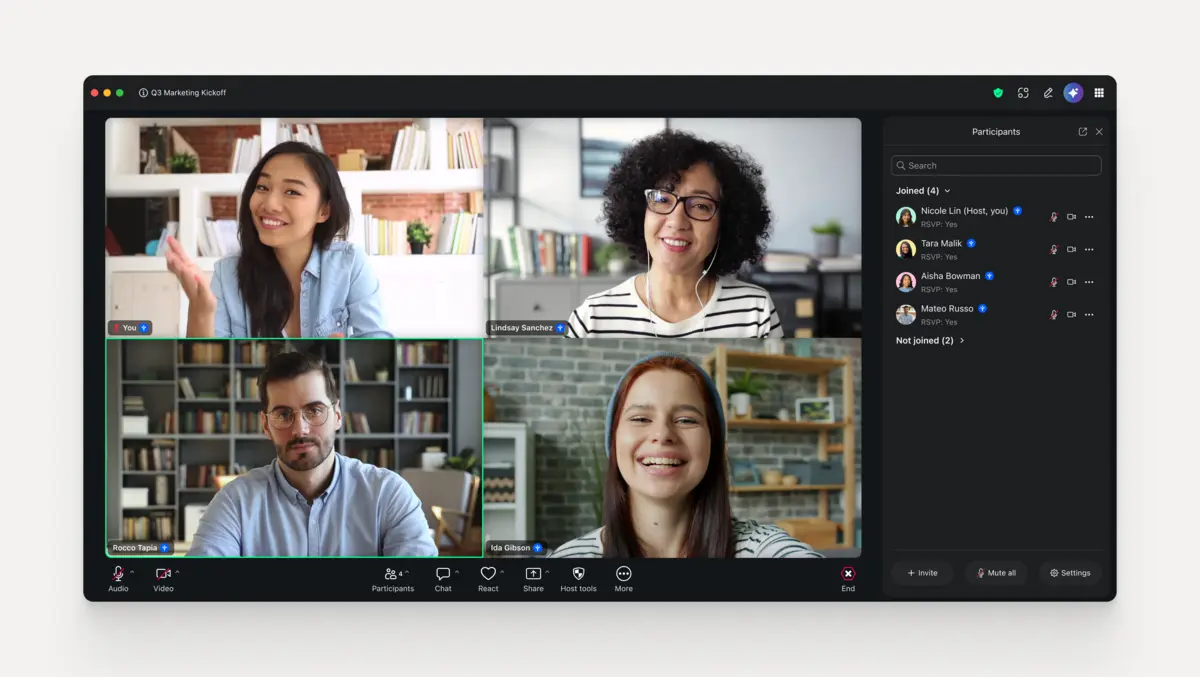
Zoom is integrating what World calls Deep Face into its meetings product. The process compares three elements: an image cryptographically signed when a user first verified at an Orb device, a live Face Auth selfie taken on the participant's device, and the live video frame shown in the meeting.
According to World, a match across those elements confirms with a high level of assurance that the participant on the call is the same verified person expected to be there. The integration analyses video, not audio.
Docusign is also working with World to add proof of human to document-signing processes. The aim is to let signers confirm specific attributes about themselves, including that they are human rather than a bot, as part of agreement workflows.
AI Workflows
World is also moving into AI-related workflow verification as automated agents become more widely used in software and customer-facing services. Proof of human will be extended into agentic workflows through integrations tied to AgentKit.
One partnership is with Vercel, where developers using its open-source Workflow SDK can add a verification step that requires human involvement. Each verification can be viewed in workflow execution records, creating an auditable trail that shows when a person was involved in a process.
Okta was also named in connection with a planned product called Human Principal. The product is intended to enable API builders to verify whether a human stands behind an agent and its actions, though details remain in the early stages.
World expects its technology to be one of the first integrations for that effort. Any reference to the Okta product was presented as forward-looking and without a delivery commitment.
Scale Claims
World says its network now includes nearly 18 million verified humans across 160 countries. That figure underpins its argument that proof of humanity could become a basic layer for consumer internet services, business processes, and AI systems that need stronger checks to ensure a real person is involved.
The broader push comes as technology companies, platforms and regulators grapple with the spread of AI-generated content, impersonation risks and automated activity that can be difficult to distinguish from genuine human behaviour. Verification systems that do not require full identity disclosure have attracted growing interest, particularly among companies seeking to reduce fraud and bot activity without collecting more personal data than necessary.
World's latest rollout reflects that trend by applying the same verification framework to dating apps, ticketing tools, video meetings, document workflows and software development environments. Its new software development kit is open source and allows any app to act as a World ID authenticator.
Together, the protocol changes, product launches and commercial partnerships mark World's latest attempt to move proof of human from a niche verification tool into broader internet infrastructure.