

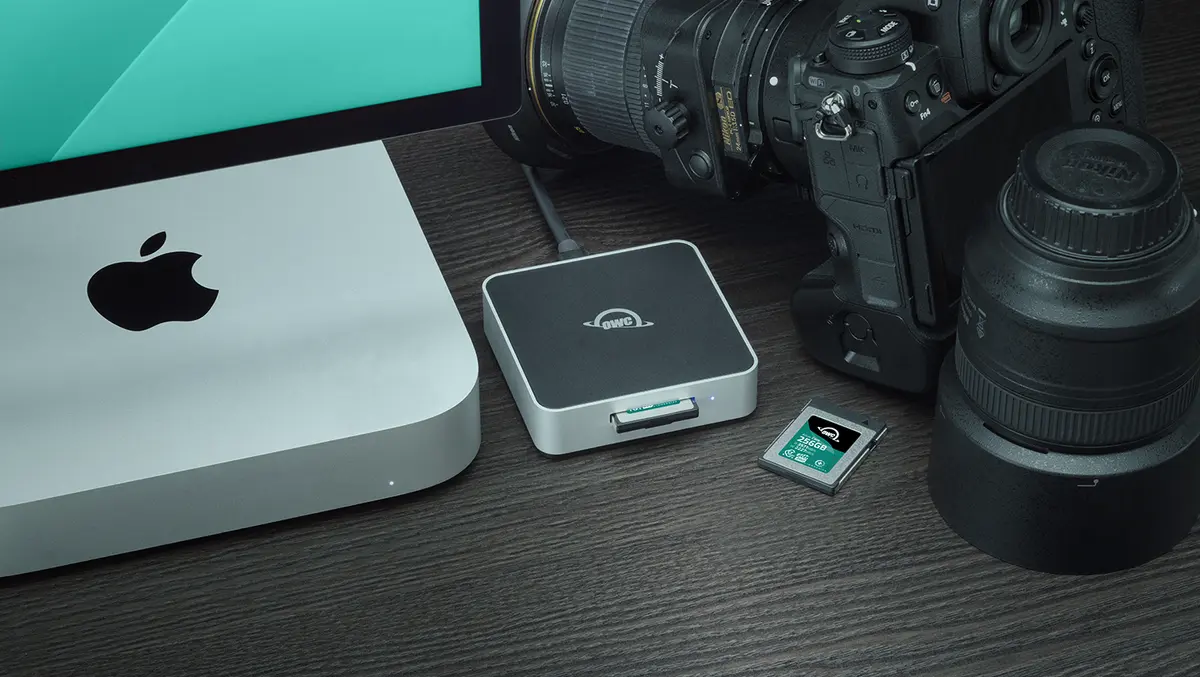
OWC launches Atlas Core CFexpress 4.0 card for creators
Mon, 29th Jun 2026 (Today)
Other World Computing has launched the Atlas Core CFexpress 4.0 Type B 256GB memory card, aimed at photographers, videographers and other content creators.
The card is the latest addition to OWC's Atlas storage line and is positioned as a lower-cost option for day-to-day shooting rather than the fastest media available. It is now on general sale for USD $279.99, with regional pricing varying by market.
OWC lists read speeds of up to 3571MB/s and write speeds of up to 2227MB/s, with sustained write performance of 368MB/s. According to the company, that exceeds VPG200 certification, a video performance standard intended to ensure consistent recording speeds for professional video work.
That places the card in a segment where creators increasingly need media that can handle high-resolution stills and video without moving to the most expensive storage products. OWC says it is intended to support RAW burst photography, 4K video and up to 8K compressed video.
Target users
OWC is pitching the product to both professional and hobbyist users, including wedding photographers, freelance videographers, online creators and enthusiasts who want a CFexpress Type B card for newer mirrorless cameras or older devices that support the format.
The card is designed for use with Canon R-series, Fujifilm GFX, Nikon Z and Panasonic S-series mirrorless cameras. OWC also says Nikon DSLR users with models such as the D5, D500 and D850 can use it as an upgrade path from XQD media.
The launch also reflects a broader shift in camera storage, as CFexpress has gained ground over older standards by offering much higher transfer rates. That has become more important for camera makers and content producers as file sizes increase and 4K and 8K workflows become more common.
Reliability focus
Beyond speed, OWC is emphasizing reliability and card management. Users will have access to its Innergize software, which includes health monitoring, performance restoration and firmware updates for supported cards.
That software approach stands out in a memory card market where vendors increasingly try to differentiate products through management tools as well as raw specifications. Health monitoring in particular has become more relevant for professional users who rotate media frequently and want more visibility into wear before a paid shoot.
OWC also says the card is built to withstand impact, bending, shock, ultraviolet exposure, electrostatic discharge and x-rays. It comes with a three-year limited warranty.
Larry O'Connor, Founder and Chief Executive Officer of OWC, said the company is targeting users who want dependable performance without paying for top-end speeds.
"Most photographers and creators don't need the most expensive card on the planet. They need the card they can trust when the moment actually matters," O'Connor said.
He added: "Missed shots don't care about marketing claims."
Describing the intended customer, O'Connor said: "Whether you're shooting a wedding, a client project, a travel vlog, or your kid scoring the winning goal, you need media that keeps up, stays reliable, and just gets out of your way. Atlas Core was built for that real-world creator who wants professional confidence without paying for speed they'll never fully use."
Market context
Founded in 1988, OWC is best known for storage, docks, memory products and accessories used across creative and business markets. The new Atlas Core line suggests the company sees room to expand in the mid-range removable media segment, where buyers balance cost, reliability and enough performance for current camera bodies rather than chasing the highest benchmark numbers.
For creators, card purchases are often tied to a wider workflow that includes offloading, editing and archive storage. Faster read performance can shorten ingest times, while sustained write consistency matters more during long takes or burst sequences, when speed drops can interrupt capture.
With Atlas Core, OWC is making the case that many users do not need top-tier media to meet those requirements. Its emphasis on VPG200 compliance, compatibility with mainstream camera systems and monitoring software reinforces that position.
The card is available in a single 256GB capacity at launch, offering enough headroom for many stills and compressed video workloads without immediately moving to higher-capacity, higher-cost media.