

Liquid Instruments launches AI tool for custom test gear
Wed, 15th Jul 2026
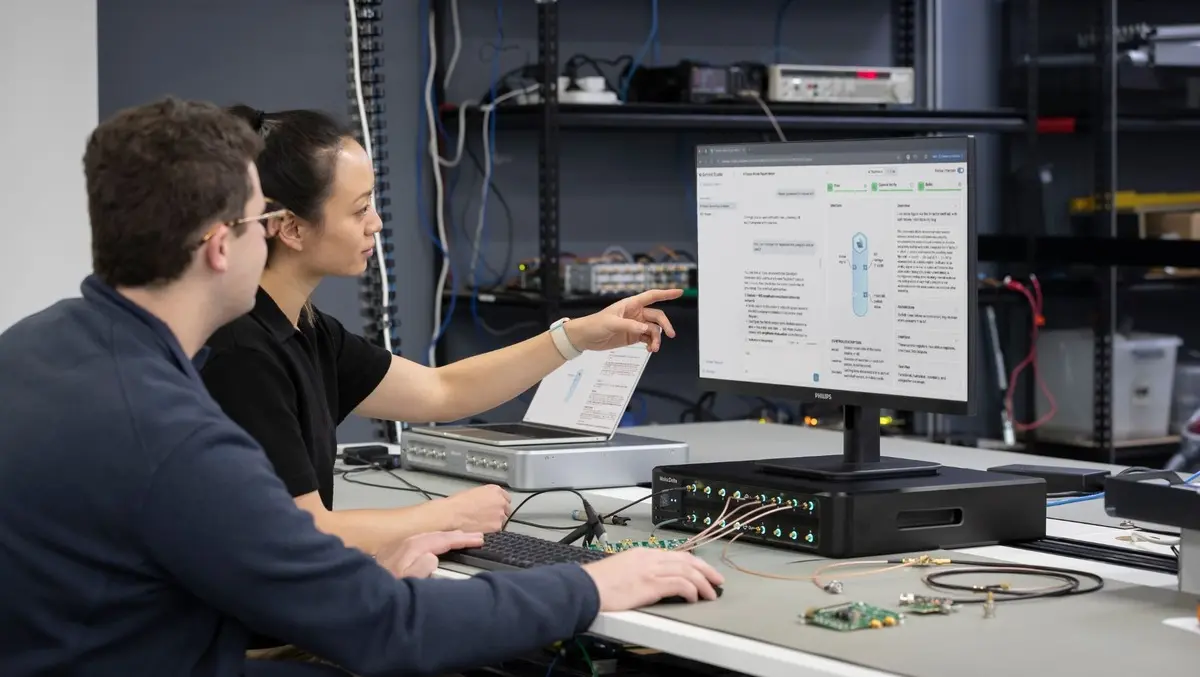
Liquid Instruments has launched GenInst Studio, a product that uses agentic AI to turn natural language prompts into customised test instruments for its Moku hardware.
The software is aimed at engineers and scientists who need specialised test and measurement tools but often face long development cycles or must rely on standard instruments that do not match their requirements.
GenInst Studio lets users create, validate and deploy application-specific instruments through a chat-based workflow. It is designed to guide users from an initial specification to deployment on Moku devices, which use reconfigurable hardware.
Liquid Instruments is positioning the launch as an expansion of AI in engineering beyond code generation and into instrument design. In practice, researchers and engineers can describe the function they want in plain language and receive a validated instrument design for testing tasks that might otherwise require specialist FPGA knowledge.
That could matter in sectors where teams need highly tailored measurement systems for research, electronics development and advanced manufacturing. Custom tools can take months to build, while off-the-shelf instruments may lack the precise features needed for complex work such as digital signal processing, custom triggering, control systems and adaptive signal generation.
Liquid Instruments recently raised USD $50 million in a Series C financing round. The round was co-led by Keysight Technologies and Australia's National Reconstruction Fund Corporation, giving the company fresh backing as it broadens its AI-led approach to electronic test and measurement.
Its products are already used by organisations including NASA, NIST, Stanford University and US defence contractors. Liquid Instruments says it supports thousands of engineers, scientists and researchers worldwide.
How it works
GenInst Studio combines AI software with the underlying Moku hardware platform. Rather than requiring users to program at a low level, it is intended to provide an auditable workflow that translates a stated objective into a working instrument that can run with low latency on the device.
This lowers the barrier for engineers who need custom instrumentation but do not have deep FPGA expertise. It could widen access to advanced test methods in labs and development teams without dedicated hardware specialists.
Daniel Shaddock, Chief Executive Officer and Co-Founder of Liquid Instruments, said the product reflects a shift in what AI can do in test engineering. "The convergence of agentic AI and reconfigurable hardware creates something genuinely new - the ability to build exactly the instrument you need, simply by describing what you want," Shaddock said. "That's something our industry has never seen before."
Early feedback
Liquid Instruments says early users have cut development times sharply. One early customer highlighted the contrast between conventional FPGA-based design work and the new workflow.
"I've been working with FPGA-based systems for decades, so I know how much expertise custom development normally requires," said Dr. Grady Koch, Chief Technology Officer of Apex Photonics. "GenInst Studio makes custom capabilities accessible without requiring deep FPGA expertise, allowing engineers to move from concept to working prototype much more quickly."
The launch also has implications for Liquid Instruments' channel partners, which see the software as a way to broaden the use of bespoke instrumentation. The company's distributor in Germany said the product could help bring advanced tools to a wider range of research and industrial settings.
"GenInst Studio opens new commercial opportunities by making advanced instrumentation easier to adopt, customize, and scale. We see strong potential for it to help reach new markets, accelerate customer adoption, and create new value across research and industry," Dreher said.
Market context
Test and measurement suppliers have increasingly added software and automation to their products, but most specialist instrument design still depends on scarce engineering skills and long development timelines. Liquid Instruments is seeking to distinguish itself by combining reconfigurable hardware with AI-driven design tools in a single workflow.
The company describes its wider strategy as generative instrumentation, in which one device can be reconfigured for different tasks rather than forcing users to assemble multiple standalone instruments. GenInst Studio extends that strategy by aiming to make the creation of bespoke tools faster and easier for non-specialists.
For users of Moku hardware, the immediate significance is practical. GenInst Studio is now available for the installed base, giving existing customers a new way to build custom instruments without the usual engineering overhead.