

OpenAI unveils Codex macOS app for multi-agent coding
Mon, 2nd Feb 2026
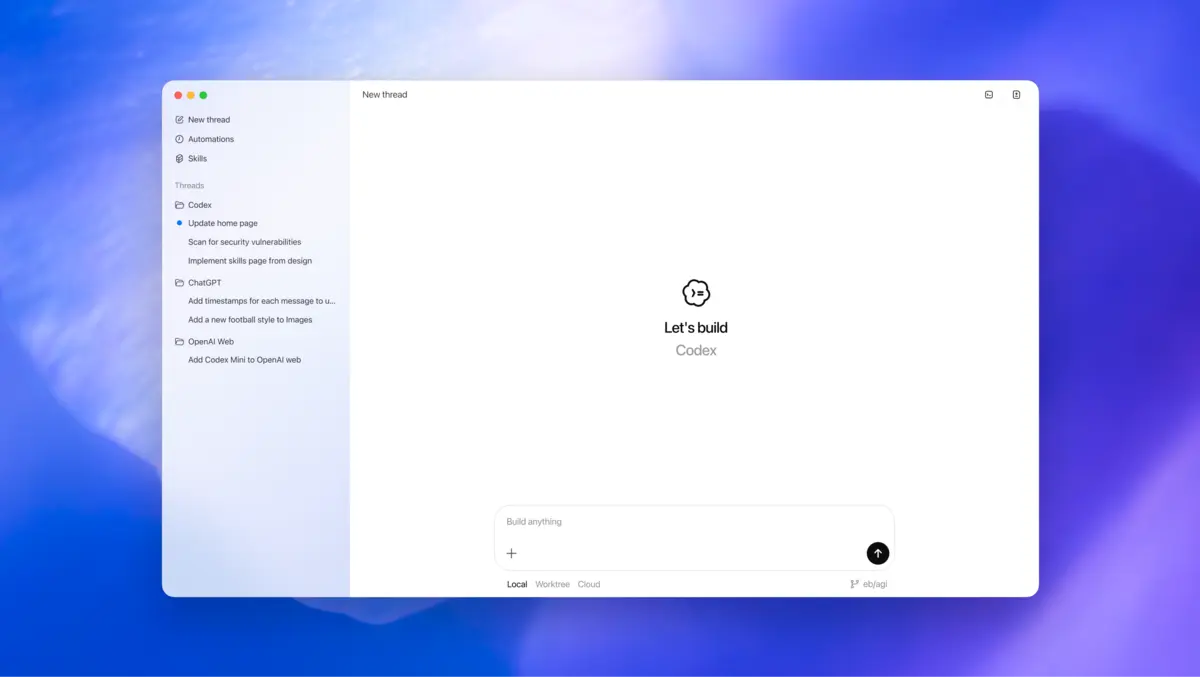
OpenAI has launched a Codex desktop app for macOS, positioning it as a dedicated development environment for "agentic coding" that manages multiple coding agents and long-running tasks.
The company said developers have moved from working with a single coding agent to supervising groups of agents across projects. The Codex app organises agent work into separate threads by project. It also supports running tasks in parallel and switching between tasks while retaining context.
OpenAI said Codex now sits across the desktop app, the command-line interface, an IDE extension and cloud access under a single ChatGPT account. The company also said it has increased rate limits across paid subscriptions and is making Codex available for a limited time to users on ChatGPT Free and Go tiers.
Managing agents
The app includes workflow features aimed at reviewing and directing agent output. OpenAI said users can review changes in a thread, comment on diffs, and open work in an editor for manual changes. The app includes support for git worktrees, which OpenAI said allows multiple agents to work on the same repository without conflicts by using isolated copies of the code.
OpenAI also highlighted the use of Automations and Skills in the Codex app. Automations schedule repeatable work and run in the background. OpenAI said results appear in a review queue when an Automation completes.
Skills package instructions, resources and scripts. OpenAI said Skills connect Codex to tools and workflows, and that the app includes an interface to create and manage them. The company said Codex can be asked to use specific Skills, or it can select them automatically based on the task.
Tool integrations
OpenAI listed example Skills used internally and made available through a library in the app. The list included fetching design materials from Figma and converting them into UI code, triaging issues and managing releases in Linear, deploying to cloud hosts including Cloudflare, Netlify, Render and Vercel, and generating images using "GPT Image". The company also referenced Skills for building with OpenAI APIs and for reading and editing common document formats.
The Codex app also includes a "personality" setting. OpenAI said developers can choose between a terse and pragmatic style and a more conversational style using a "/personality" command in the app, CLI and IDE extension.
Security controls
OpenAI said the Codex app uses system-level sandboxing that is native, open-source and configurable, in line with the Codex CLI approach. The company said agents are limited by default to editing files in the folder or branch where they are working and using cached web search. It also said agents request permission to run commands that require elevated permissions such as network access.
OpenAI said teams can configure rules that allow certain commands to run with elevated permissions automatically.
Adoption claims
OpenAI said more than a million developers used Codex in the past month. It named Harvey, Sierra and Wonderful among startup users, and Cisco among large enterprise users. The company also cited indie developer Peter Steinberger, creator of OpenClaw, which it said was built entirely with Codex.
OpenAI said Steinberger made more than 82,000 contributions on GitHub across more than 120 projects over the past year. It said he reported that his productivity had roughly doubled since switching fully to Codex.
The company also provided an internal example. OpenAI said a team of four engineers built and shipped the Sora for Android app in 28 days using Codex.
Pricing and access
OpenAI said the Codex app is available on macOS and is included for users on ChatGPT Plus, Pro, Business, Enterprise and Edu subscriptions. It said usage is included in subscriptions, with an option to purchase additional credits. For a limited time, OpenAI said Codex will also be available to ChatGPT Free and Go users, alongside higher rate limits for paid users during the same period.
The company framed the release as part of a broader shift in how developers use AI tools for software work, moving from individual interactions to coordinated agent workflows that run over longer durations.
"We'll continue to expand where and how developers can use Codex, including making the app available on Windows, pushing the frontier of model capabilities, and rolling out faster inference."
OpenAI also said it is working on Automations that support cloud-based triggers, and it said Codex will run continuously in the background rather than only when a user's computer is open.