

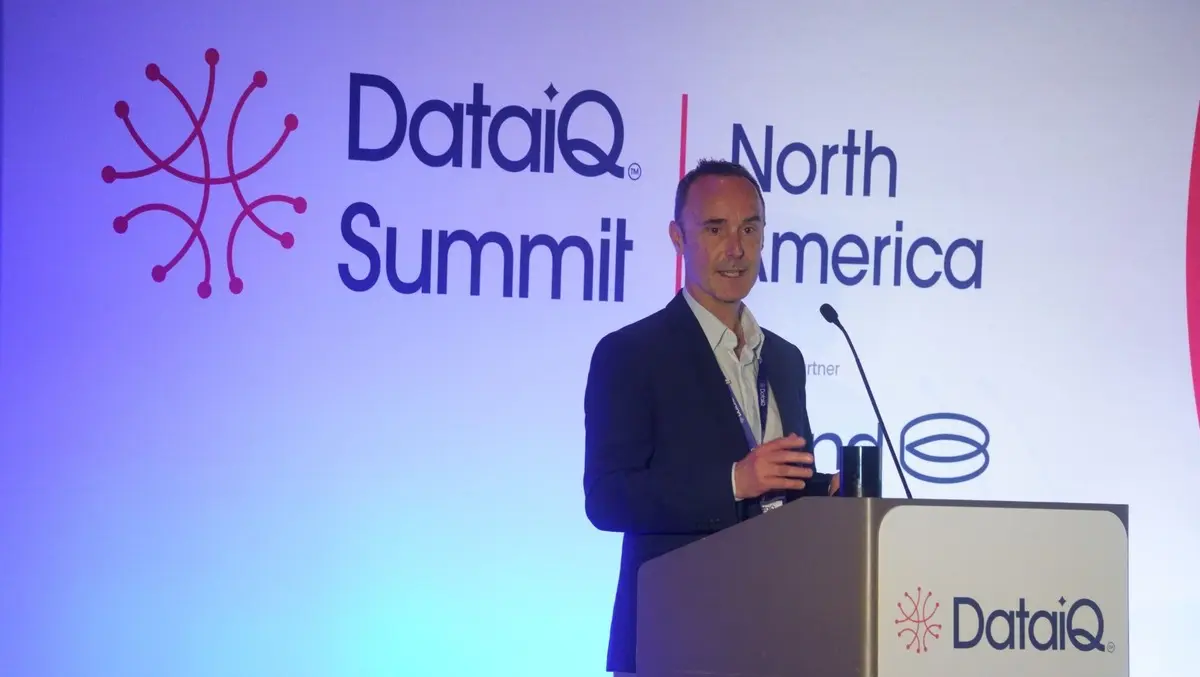
DataIQ names top 10 North America data & AI leaders
Mon, 11th May 2026
DataIQ has published its Top 10 Data and AI Leaders in North America for 2026, with women accounting for six of the 10 people named.
Drawn from the wider DataIQ 100 North America cohort, the list includes leaders from Chevron, Truist, Swire Coca-Cola, Colgate-Palmolive, Sidley Austin, First Citizens Bank, Tokio Marine North America Services, Brown & Brown, Destination Canada and IHG Hotels & Resorts.
The ranking reflects a broader shift in what organisations expect from senior data and AI executives: away from a narrow focus on platforms and analytics, and towards leadership more closely tied to business decisions, governance, adoption and measurable results.
The top five are Anu Krishnan, Chief Data & Analytics Officer, Chevron; Amit Patel, Chief Data Officer - Wholesale Bank, Truist; Bharathi Rajan, Vice President - Data, AI & Digital, Swire Coca-Cola, USA; Diana Schildhouse, EVP, Chief Data and Analytics Officer, Colgate-Palmolive; and Jane Rheem, Chief Data & AI Officer, Sidley Austin LLP.
The remaining five are Scott Richardson, Chief Data & Analytics Officer, First Citizens Bank; Yuri Aguiar, SVP & Chief Technology Officer, Tokio Marine North America Services; Mike Vaughan, Chief Data Officer, Brown & Brown; Meaghan Ferrigno, Senior Vice President, CFO & CDAO, Destination Canada; and Wei Manfredi, SVP of AI and Architecture, IHG Hotels & Resorts.
The organisations represented span energy, banking, consumer goods, legal services, insurance, tourism and hospitality, underlining how data and AI roles have moved into core management structures across a wide range of industries.
Decision focus
Alongside the ranking, DataIQ published research on how companies are using data and AI in business processes. It found that 47% of enterprise data and AI initiatives are now decision-bearing, meaning they directly support or execute decisions rather than simply provide analysis, with 26% of them embedded in operational workflows where decisions are carried out in real time.
The findings suggest competitive advantage now depends less on the technology itself and more on how organisations apply intelligence in systems, processes and day-to-day work.
David Reed, Chief Knowledge Officer and Evangelist at DataIQ, outlined how the role has changed.
"Being named in the DataIQ 100 North America Top 10 reflects a level of influence that goes beyond building strong data functions. These are leaders who are reshaping how their organisations compete, working directly with the C-suite to embed data and AI into strategy and operations," Reed said.
He added that the remit of many senior data leaders has broadened.
"This year's Top Ten shows that the role has expanded significantly. It's no longer just about platforms or analytics. Today's leaders are increasingly responsible for how data and AI shape decisions and deliver measurable outcomes by embedding intelligence into workflows and driving execution at scale. This includes governance, literacy and culture. In North America, we're seeing a particular focus on ROI, responsible AI, and navigating a complex regulatory landscape," he said.
Leadership traits
DataIQ also asked several of the ranked executives which qualities will matter most for leaders in the year ahead. Their answers pointed to a mix of commercial judgement, organisational trust and practical communication, rather than purely technical depth.
Krishnan said leaders must combine strategic focus with people management, as adoption becomes as important as technical deployment.
"To keep pace with the fast-changing world of data and AI, leaders need strategic clarity - prioritising initiatives that drive the most value, alongside empathy and human-centred leadership. Build change management programmes that reduce fear and increase adoption. Leadership is always focused on value, not the technology," she said.
Patel argued that judgement over pace is now central, particularly in regulated sectors where mistakes can have wider consequences.
"The most critical trait for effective data and AI leadership today is judgment, specifically, knowing when to move fast and when to deliberately slow down. Move quickly where the data is mature, the value is clear, and the risk profile is well understood.
"Slow down intentionally in areas involving high regulatory exposure, model explainability, or customer impact. This disciplined approach allows innovation without eroding trust," he said.
For Rajan, credibility with business teams comes before any technology agenda.
"Business stakeholders want to see data and AI teams as teams who are there to help and enable them, not pushing technology for the sake of technology. When people across the organisation see that you are invested in understanding the business and their day-to-day activities, they know you're in for the long haul. Gaining the trust of the business and ensuring teams are aligned with expected outcomes has been instrumental to success," she said.
Schildhouse said successful leaders will need to be seen as business executives first, with a clear link between data work and commercial value.
"Data and AI leaders sit at a pivotal time. It is imperative that we are not only data and AI leaders but business and transformation leaders: viewed across our organisations not as siloed specialists but as leaders with deep business acumen and a broad-based focus on creating value.
"The most successful leaders will move from pilot and hype to scale and impact, and articulate the quantifiable value being driven from their work. Demystify the lingo and make AI accessible and understandable across your organisation," she said.
Rheem framed the next stage of the role in similar terms, with more emphasis on enterprise judgement than technical elegance.
"Over the next 12-24 months, the data and AI leadership role will shift from building foundations to orchestrating enterprise-wide adoption and value realisation. Leaders will act as enterprise integrators, aligning technology, legal considerations, operating models, and talent strategies.
"The C-suite values judgment, clarity, and trust far more than elegance of solution. Develop the ability to say 'no' as confidently as 'yes', frame trade-offs in plain language, and take accountability for outcomes, not activity," she said.