

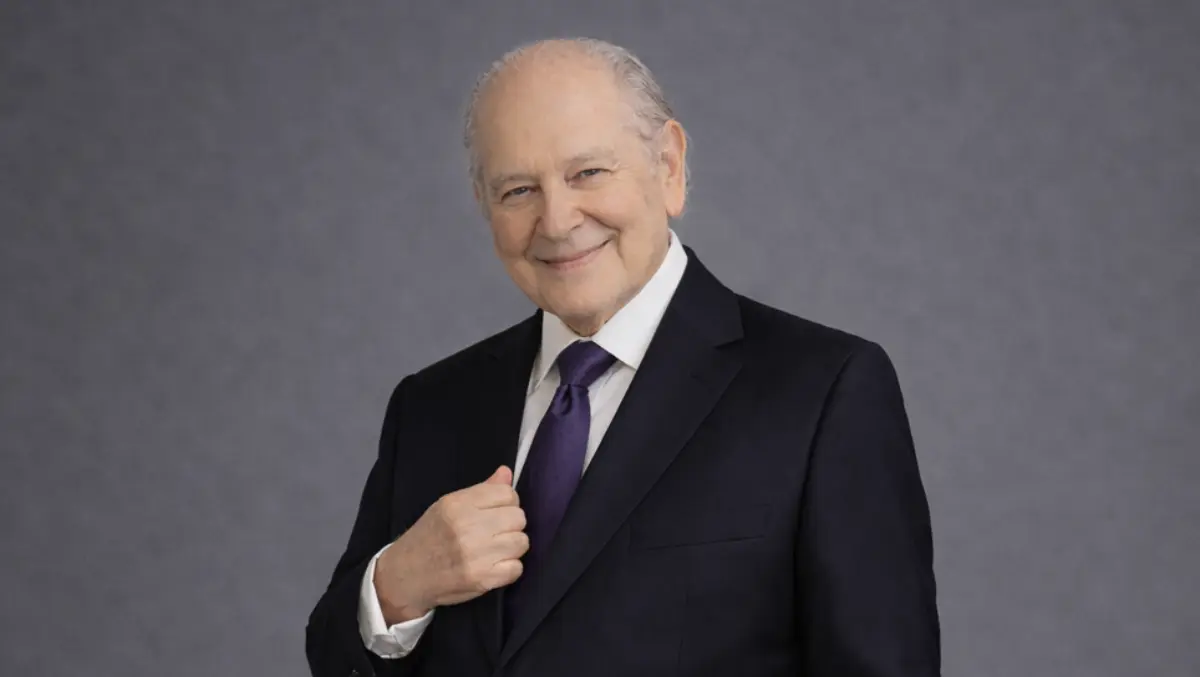
Apple co-founder Ronald Wayne to headline Apple@50 event
Wed, 4th Mar 2026
Apple co-founder Ronald G. Wayne will appear as a special guest at the Computer History Museum's opening event for its Apple@50 exhibition in Mountain View, California.
The evening programme marks the company's 50th anniversary and will focus on Apple's influence on the technology industry, as well as the people involved in its earliest work.
Wayne, now nearly 92, is scheduled to speak during the event. He will also join an on-stage segment with other Apple alumni and CBS News correspondent David Pogue, who will launch his book Apple: The First 50 Years.
"I am grateful, at nearly 92, for the opportunity to shed more light on Apple's formation and its earliest foundations," Wayne said. "The origins of great institutions matter, and I look forward to providing context that has not always been fully heard."
Induction planned
A signed copy of Wayne's book Adventures of an Apple Founder will be inducted into the museum's collection during the ceremony.
The Apple@50 event will also serve as the public launch of the Apple@50 exhibition, which is scheduled to run from March 11 through September 7, 2026.
The exhibition will feature rare artefacts and prototypes tracing key moments in Apple's development, though the museum has not released a full list of items.
Marc Etkind, president and CEO of the Computer History Museum, said Wayne's appearance will add first-hand perspective on the company's early days.
"We are honored to welcome Ronald G. Wayne during the opening of the event to reflect on the pivotal role he played in Apple's founding," Etkind said. "CHM's goal is to tell the full story of computing history, and that no doubt includes Ron's role as the third and often 'forgotten founder' of Apple."
Early contributions
Wayne worked as an engineer, inventor and author before and after his involvement with Apple. His career spanned more than seven decades and included work in electronics, technical documentation systems, regulatory-approved gaming devices, industrial design and applied instrumentation.
During Apple's early formation, Wayne drafted the original Apple Computer Company partnership agreement in 1976. He also created the company's first logo, showing Isaac Newton seated beneath an apple tree.
He produced the Apple I Operation Manual, which set out operating instructions and included three circuit architecture drawings used to fabricate the initial printed circuit boards.
The documentation supported initial board production, and Wayne's work is credited with helping shift Apple from prototype to a product that could be manufactured in volume.
Wayne also designed the Apple II's horizontal case. The integrated, all-in-one format became part of the machine's distinctive look in Apple's early years.
The museum's focus on Apple comes amid continuing interest in the personal computing era. Museums and collectors have sought early machines, prototypes, printed circuit boards and documentation, often displaying them as evidence of the shift from hobbyist devices to mass-market products.
Wayne's appearance and the planned induction of his book give the museum both a public event and a long-term addition to its collection. The institution has framed the exhibition as a look at Apple's development across hardware, software and product design, without outlining detailed themes.
Wayne has written other works, including Tomorrow's Money. His appearance offers a rare opportunity to hear from one of the three figures linked to Apple's founding, alongside Steve Jobs and Steve Wozniak.
The museum will open the Apple@50 exhibition after the March 11 event, with the display running through early September 2026.